
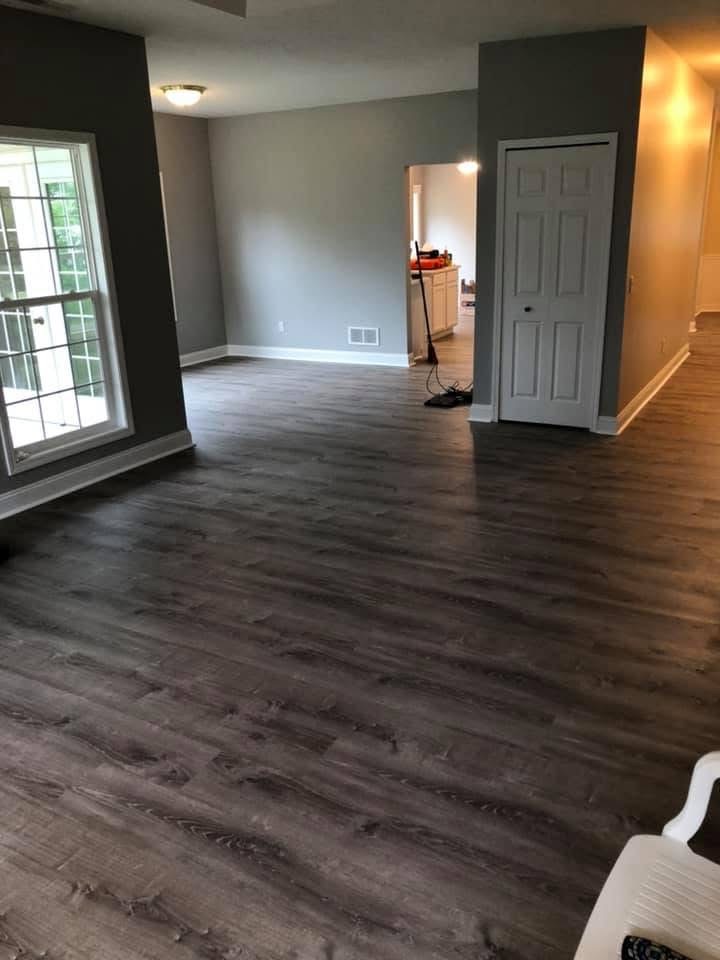
Porcelain wins for kitchens, baths, mudrooms, and entries in Canton, and it is the higher-cost installed option. LVT wins for basements and budget-tier installs and is the more affordable of the two. Both are good products in their right applications.
Porcelain Tile in Canton Homes
Porcelain tile is dense, low-porosity, and durable. Canton porcelain installs run 30+ years residential before showing meaningful wear. The tile itself is mechanically tough (resists chipping, scratching, and impact), and the surface is glazed to repel moisture and stains. Porcelain works in any room (kitchens, baths, mudrooms, entries, even basement floors over proper substrate) and reads as a permanent floor finish. The downside: porcelain is cold underfoot in winter without radiant heat, harder on dropped glassware, and costlier to install than LVT.
LVT (Luxury Vinyl Tile) in Canton Homes
LVT (also called LVP for plank format) is a multi-layer vinyl product with a printed image layer and a wear-resistant clear top. Modern LVT looks remarkably like wood or stone from 4 feet away. It's water-resistant (most products), softer underfoot than tile, warmer in winter, and forgives dropped items better than porcelain. LVT installs floating (click-lock) over almost any flat substrate including concrete, plywood, or even existing tile if it's flat. The downside: LVT is not a 30-year floor; it shows wear in 10 to 15 years in heavy traffic and the printed image can fade in direct sunlight.
Which Wins By Room
Canton room-by-room recommendation: kitchens get porcelain (the cooking-spill durability is worth it). Bathrooms get porcelain (the moisture handling is non-negotiable). Mudrooms and entries get porcelain (sand and salt destroy LVT seams). Basements get LVT (warmer, softer, easier install over concrete). Bedrooms get carpet or wood (neither tile nor LVT is the right call for sleeping rooms). Whole-house tile installs (less common but increasing) usually run porcelain throughout for visual continuity.
Substrate, Subfloor, and Why It Matters
Substrate determines tile install lifespan. Plywood subfloors must be reinforced with cement backer board for porcelain (otherwise tile cracks within 18 months due to subfloor deflection). LVT can install over plywood directly. Both products require flat substrate within 1/8 inch over 10 feet; high spots get ground down, low spots get filled with self-leveling compound. Old vinyl floors must be tested for asbestos before removal in pre-1985 homes; LVT can sometimes be installed over sound non-asbestos vinyl, porcelain cannot.
Canton Material Cost and Install Cost in 2026
Canton porcelain tile installation in 2026 is the higher-cost option installed (material plus labor plus thinset, grout, and waterproofing where needed). High-end large-format porcelain or natural-stone-look pushes higher still. LVT installs are the more affordable option (material plus thin pad plus float-lay labor), rising with pattern-matching or mortar-set LVT. Demo of existing flooring is itemized separately for both products. Material cost has stayed flat year-over-year for 2026; labor cost is up about 4 percent over 2025.
Canton Home Remodeling FAQ
What's cheaper: tile or LVT in Canton?
LVT is cheaper to install. In Canton, LVT is the more affordable option and porcelain is the higher-cost one. The lifetime cost difference narrows because porcelain lasts 30+ years and LVT lasts 10 to 15 years.
Is LVT good for kitchen floors in Canton?
LVT works in kitchens but porcelain is better for kitchens that see heavy use. The waterproofing and stain resistance of porcelain handle kitchen spills better. Budget-tier kitchen remodels can use LVT for cost savings.
Can you install porcelain tile over LVT in a Canton remodel?
Generally no. LVT must be removed before porcelain install because the floating LVT layer doesn't provide a stable substrate. Some commercial-grade glued-down LVT can stay if it's flat and bonded; we assess case-by-case.
Does heated floor work under both tile and LVT?
Yes for both. Electric radiant mat installs over substrate before tile or LVT goes down. Tile transmits heat better than LVT; tile floors with radiant heat feel warmer than LVT floors with the same radiant system.
Which lasts longer in a Canton mudroom?
Porcelain. Sand and road salt tracked into Canton mudrooms in winter destroys LVT seams within 5 to 8 years. Porcelain handles the abrasion and chemicals indefinitely.
Need Canton Tile Flooring?
20+ years of home remodeling experience across Canton and the Massillon area.
Free Estimate (330) 704-7599Read our full Canton Tile Flooring page · More posts · Get a free estimate