
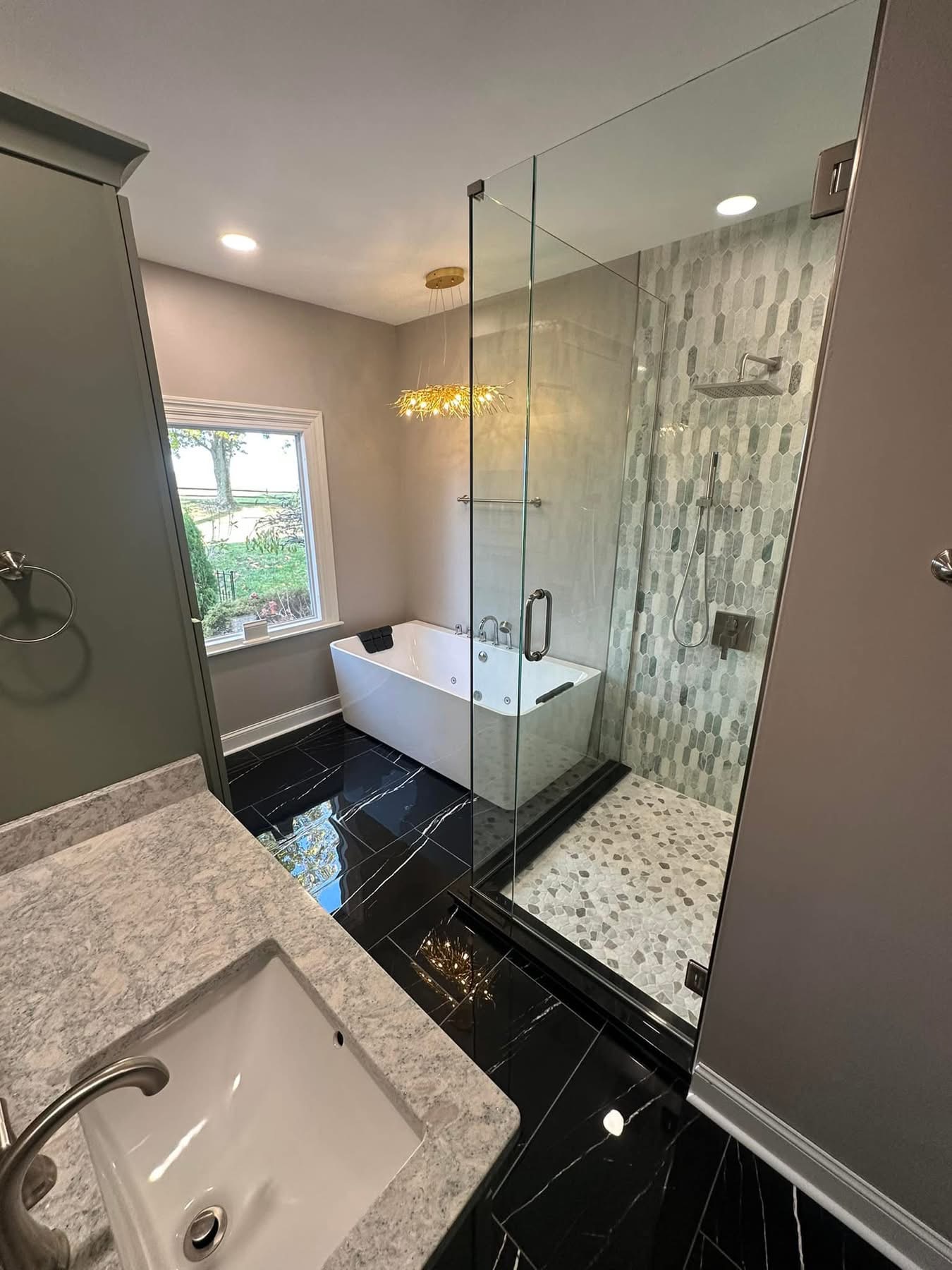
Building permits for Green run through Summit County Building Standards. A cosmetic swap, new vanity, new toilet in the same spot, new flooring, generally needs no permit, while moving or adding plumbing, running new electrical circuits, and structural changes do. Inspections happen at rough-in, before anything is buried behind drywall and tile, which is why the permit shapes the project schedule instead of just adding paperwork. A remodeler who handles the filing and inspections as part of the job removes the whole burden from the homeowner.
Who Actually Issues Permits in Green
Green is a Summit County city, and its building department work runs through Summit County Building Standards. That distinction trips up homeowners who move in from Stark County towns a few minutes south, where city building departments handle their own permitting. For a Green address, the plumbing, electrical, and structural permits on a bathroom remodel are filed with the county, and county inspectors are the ones who sign off at rough-in and final.
For a homeowner, the practical takeaway is simple: the permit path is well established and moves at a predictable pace, and a contractor who works in Green regularly builds the inspection windows into the schedule from the start rather than discovering them mid-project.
What Needs a Permit and What Does Not
The line is about systems, not surfaces. Replacing a vanity where the old one stood, swapping a toilet in place, installing new flooring, painting, and new light fixtures on existing circuits are finish work; they generally need no permit. The permit conversation starts when the remodel touches what is inside the walls and floor: relocating a drain or supply line for a layout change, converting a tub to a shower with a new valve and drain, adding a circuit for a heated floor or a new exhaust fan run, or opening a wall that might be carrying load.
Most real bathroom remodels in Green land on the permitted side, because the projects worth doing usually move something. A tub-to-shower conversion is the everyday example: new drain location, new valve, new blocking, and often subfloor repair, all of which deserve the rough-in inspection that a permit brings with it.
Why Unpermitted Work Costs More Later
The argument for skipping permits is always the same, speed, and it buys trouble in three installments. At resale, appraisers and buyers’ inspectors flag remodeled bathrooms with no permit history, and some lenders make closing contingent on remediation. On insurance, damage that traces to unpermitted plumbing or electrical work can complicate or void a claim exactly when the stakes are highest. And if unpermitted work is discovered, the county can require it to be opened up for inspection, which means demolishing finished tile to prove what should have been proven at rough-in.
Weigh that against what the permit actually costs on a bathroom remodel, a modest line item and a few scheduled inspection windows, and the math has never once favored skipping it on any project we have priced.
How Inspections Sequence a Bathroom Remodel
The rough-in inspection is the one that shapes the calendar. After demo, the new plumbing and any new electrical go in while the walls and floor are open, and the county inspector looks at all of it before insulation, drywall, or backer board closes it up. That inspection is a feature for the homeowner: a second set of trained eyes confirms the drain slopes, the venting, and the wiring while they can still be corrected in minutes instead of days.
From there the build runs in its natural order: waterproofing on the walls and pan, tile, fixtures, and the final inspection at the end. On our Green bathroom remodels, the waterproofing stage gets treated with the same seriousness as the inspected stages, because it is the layer that decides whether the shower is still sound in ten years, even though no municipal inspector looks behind the tile once it is on.
Building the Permit into the Timeline
A well-run bathroom remodel in Green folds the permit into the schedule invisibly. The filing happens while selections are being finalized, demo starts once the permit is issued, the rough-in inspection is booked as the plumbing wraps, and the final is scheduled with the punch list. Handled that way, most bathrooms run 2 to 4 weeks from demo to walkthrough, with the inspection days known in advance instead of appearing as delays.
That is how we run every job: we file the permits, meet the inspectors, and hand you a bathroom with a clean permit record behind it. You approve one fixed written scope before demo, the schedule shows the inspection windows, and the number you approved is the number you pay unless you change the plan.
What Inspectors Actually Look For at Rough-In
Homeowners sometimes picture the rough-in inspection as a bureaucratic box-check. In practice it is a short, focused visit with a specific list. On the plumbing side, the inspector confirms the drain and vent sizing, the slope on the new drain runs, the pressure test on the supply lines, and that the trap arrangement under a new shower actually works on paper and in the wall. On the electrical side, it is circuit sizing, GFCI protection where the code requires it, box fill, and the exhaust fan run terminating outside the house instead of into the attic, which is a surprisingly common original sin in 1990s builds.
Every one of those items is cheap to fix while the wall is open and expensive to fix after tile. That is the entire logic of the inspection sequence, and it is why we treat the rough-in visit as a feature of the project rather than a hurdle. A pass on the first visit is the norm when the work was planned properly, and the schedule we hand you assumes exactly that.
Common Permit Mistakes We See in Green Remodels
The first mistake is assuming the rules from a previous house apply here. Families who move to Green from Canton, Massillon, or North Canton are used to city building departments, and they either file in the wrong place or conclude that no city desk means no permit needed. For a Green address the county is the desk, and the requirement did not go anywhere.
The second is letting a low bid quietly exclude the permit. When one quote is meaningfully cheaper than the others, the permit, the inspections, and sometimes the insurance are usually what got left out. Asking every bidder who pulls the permit and who meets the inspector is one of the fastest ways to sort a professional operation from a weekend crew.
The third is sequencing selections after demo. The permit review wants to know what is being built, which means the layout, the fixture locations, and any structural change have to be decided before filing. Projects that demo first and decide later stall in exactly the window where the bathroom is unusable. We finalize the scope and selections first, file, and only then open the room, which is why our down windows stay short.
Green Bathroom Permit FAQ
Do I need a permit to remodel a bathroom in Green, OH?
If the project moves or adds plumbing, runs new electrical circuits, or touches structure, yes, permitted through Summit County Building Standards. Pure finish swaps in the same locations generally do not need one. We confirm the scope’s permit needs during the consult.
Who pulls the permit, me or the contractor?
Your contractor should. Stark Elite files the permits, schedules the inspections, and meets the inspectors on site as part of every Green bathroom job. A contractor who asks the homeowner to pull their own permit is shifting liability, and it is worth asking why.
Will inspections slow my project down?
Not when they are planned. The rough-in inspection is booked as plumbing and electrical wrap, and the final rides with the punch list. Built into the schedule from day one, the inspection windows are known dates, not surprises.
Does a tub-to-shower conversion need a permit?
Almost always, because the drain moves, the valve is new, and subfloor repair is common once the old tub is out. The rough-in inspection covers exactly the work that gets buried behind the new tile.
What happens if my bathroom was remodeled without permits before I bought the house?
It is a disclosure and appraisal question at resale more than an emergency. If you are remodeling again, the new permitted project effectively brings the room back into the record. We look at what exists during the walkthrough and plan the scope accordingly.
Remodeling a Bathroom in Green?
We handle the Summit County permits, the inspections, and the waterproofing nobody inspects. One fixed written scope, two owners on the job, no surprises.
Free Quote (330) 704-7599Green remodeling services · Bathroom remodeling in Green · Get a free quote