
Luxury vinyl plank (LVP) is the most-installed flooring product in Massillon homes right now. It looks like wood, costs less, handles moisture, and DIY-friendly enough that thousands of homeowners install it themselves every year. The DIY-vs-pro question depends mostly on the room layout and the existing subfloor condition. Here’s how to decide.
When DIY Works
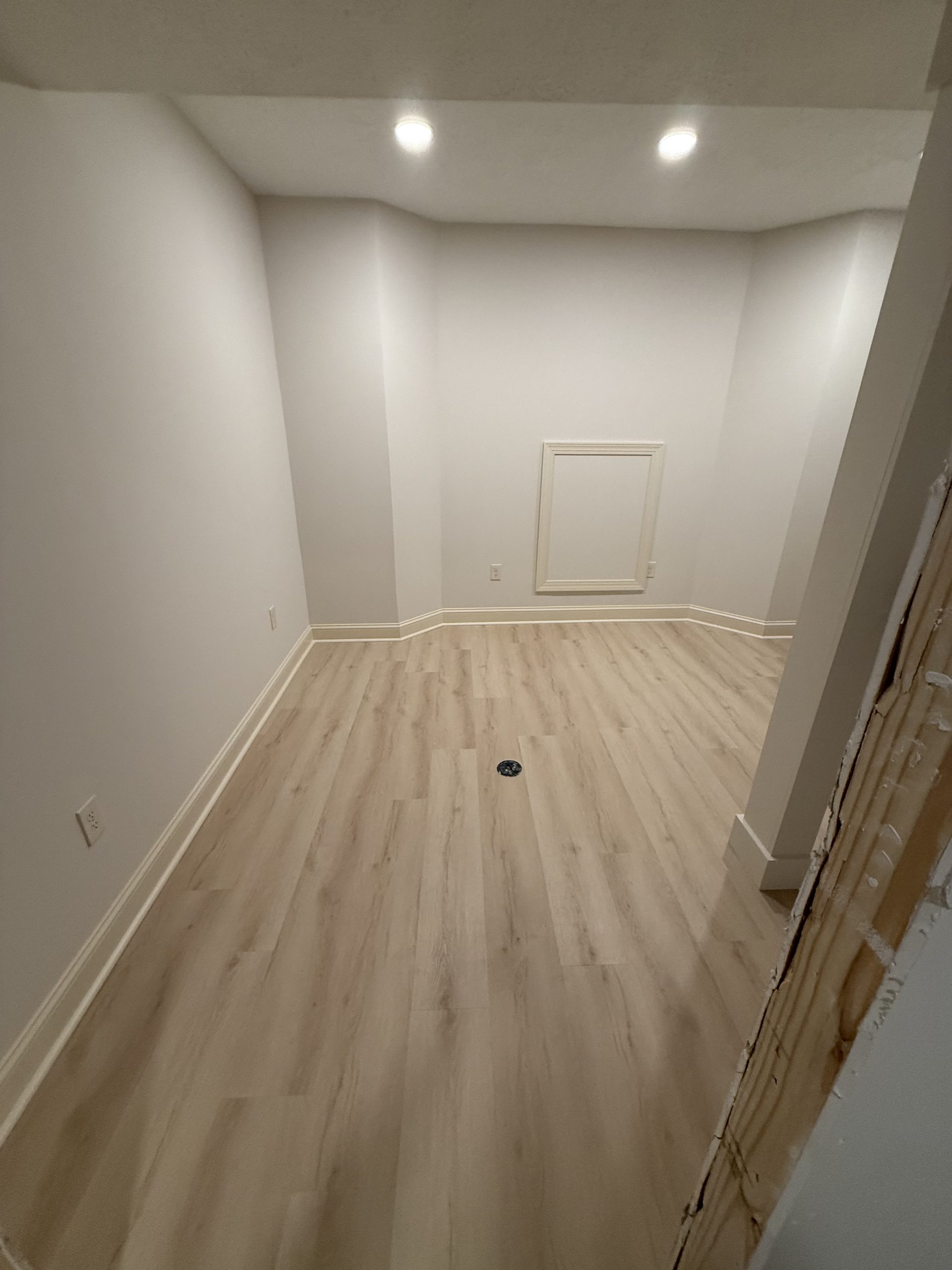
Square or rectangular rooms with no obstacles. A bedroom, basement, or simple living room with straight walls and no built-ins is genuinely DIY-friendly. Time investment: 1-2 weekends for a 200-300 sq ft room.
Subfloor that’s already flat and dry. Existing concrete or plywood that’s in good condition needs no significant prep. Just clean and underlayment.
Click-lock LVP (most modern brands). The planks lock together without glue or nails. Cuts are made with a utility knife, not a saw.
Reasonable budget for tools. Tapping block, pull bar, spacers, and a quality utility knife. $80-150 in tools that pay for themselves on a single project.
When DIY Becomes a Bad Idea
Rooms with multiple doorways, transitions, or angles. Cutting around door jambs, transitioning between rooms, and matching plank patterns across openings is genuinely difficult. Pros do this fast; first-time DIYers spend hours on each transition.
“Maintaining straight rows and uniform expansion gaps over a large area is harder than it looks.”
Uneven subfloors. Concrete that’s not flat, plywood with high spots or low spots, or any subfloor with deflection requires leveling work before LVP goes down. Skipping this causes the planks to lock incorrectly and creates squeaks.
Wet basements or moisture-prone areas. Even waterproof LVP requires proper moisture management beneath. A basement with any history of dampness needs a vapor barrier and possibly a subfloor system.
Stairs. LVP on stairs requires special tread and riser pieces, precise cuts, and adhesive. Almost always worth hiring out.
Larger rooms (over 500 sq ft). The labor scales linearly but the precision compounds. Maintaining straight rows and uniform expansion gaps over a large area is harder than it looks.
Cost Comparison
For 500 sq ft of standard LVP installation in a Massillon home:
- DIY: $1,500-3,500 in materials + $80-150 in tools + 12-25 hours of weekend work
- Pro install: $3,800-6,800 turnkey, including subfloor leveling if needed, transitions, and warranty
- Difference: $1,500-3,000 for labor and the warranty/workmanship difference
Frequently Asked Questions
How much does LVP installation cost in Massillon?
Standard LVP material: $2.50-6.50 per sq ft. Quality premium LVP: $5-10 per sq ft. Pro installation: $2.50-4.50 per sq ft on top. 500 sq ft pro install: $3,800-6,800 turnkey.
How long does LVP last in a Massillon home?
Quality LVP with proper installation: 18-25 years. Budget LVP: 8-15 years before showing wear at high-traffic spots and edges.
Can LVP be installed over existing tile or hardwood?
Yes, if the existing surface is flat, sound, and the height transition works for your doors and trim. We assess this during the in-home estimate.
Does LVP work in basements?
Yes, LVP is one of the best basement flooring options because it handles minor moisture better than hardwood or carpet. Wet basements still need waterproofing first; LVP isn’t a substitute for moisture management.
Ready to Talk About Your Project?
Considering LVP flooring for your Massillon home? Free in-home estimate, written quote, no high-pressure sales.